ENTER TO WIN $200 GIVEAWAY!! CLICK HERE X
image
GET LISTED

Mental Health

Talk Therapy vs Holistic Therapy - Which Approach Is Right for You?

Mental Health, on Nov 26, 2024

Making the decision to seek therapy can be daunting. Part of you might wonder, “Do I really need this?” while another part questions, “What should I even expect?” Let’s face it—if you’ve never been in therapy, it’s hard to understand what it entails.

Media often portrays therapy as lying on a couch, pouring your heart out to someone while they sip their latte and jot notes in a notepad. While this can be one version of therapy, the truth is, there’s no one-size-fits-all approach. It all depends on the type of therapy you’re seeking.

What is Talk Therapy?

Talk therapy, or “couch therapy,” is one of the most widely recognized forms of healing in the West. It encourages individuals to explore their emotions, experiences, and patterns through verbal expression, aiming to foster self-awareness and emotional clarity. While this process can be incredibly validating and transformative, it often demands a degree of vulnerability that many people find intimidating. Let’s be honest—most people aren’t comfortable talking about what they’re really feeling, especially in a culture that discourages emotional expression and values "powering through."

Talk therapy is like hitting the gym for your emotions—tough at times but ultimately transformative. It provides a safe space to unpack thoughts and feelings, connect the dots between past and present, and build emotional muscles like self-awareness and resilience. By helping you recognize patterns, reframe unhelpful thinking, and set healthier habits, therapy turns insights into action.

But you know what else the gym and talk therapy often have in common? A desire for transformation as fast as possible.

Western culture's fast-paced nature has undoubtedly shaped how we approach mental health and healing. In a society driven by efficiency, instant gratification, and measurable outcomes, the demand for quick fixes often overshadows the value of deep, reflective processes. This mindset can lead us to prioritize short-term, solution-focused therapies over approaches that encourage us to truly connect with and feel our emotions. This is why many of the most popular forms of talk therapy, such as Cognitive Behavioral Therapy (CBT) and solution-focused approaches, have risen in popularity in recent years.

What is Holistic Therapy?

While talk therapy is an excellent foundation for mental health care, it doesn’t always resonate with those who struggle to connect through words. Language is a powerful tool, but it’s not the only one available to help us process our experiences. For individuals accustomed to moving quickly through life, slowing down to reflect and sit with emotions might feel counterintuitive. Building trust and rapport with a therapist—a crucial component of talk therapy—also requires patience and time, which can clash with the cultural demand for rapid results.

Holistic therapy offers a counterbalance to the limitations of traditional models. By incorporating practices that address the mind, body, and spirit, holistic approaches to healing remind us of our interconnectedness and encourage us to move beyond intellectualizing our emotions.

As a holistic therapist myself, some days in session might look a bit unconventional compared to traditional talk therapy. Sessions may involve asking my client to become more in tune with where they feel their emotions in their body or inviting them to paint what they envision their emotions to look like. These modalities encourage us to slow down and embrace the full spectrum of human experience, including the messiness and discomfort that come with truly feeling. This approach recognizes that emotional well-being is deeply intertwined with physical sensations, spiritual practices, and creative expression. Alternative methods like these can help unlock emotions that words alone may not access.

While holistic therapy offers a rich, integrative approach, it’s not without its challenges. Its broad range of practices—some well-researched, others less evidence-based—can lack standardization, making it harder to ensure consistency and measure outcomes. For clients seeking quick relief, its emphasis on long-term healing and addressing root causes might feel less effective for managing acute symptoms. Additionally, the commitment required to embrace unfamiliar or unconventional methods can be daunting, and the integrative nature of holistic therapy may feel overwhelming to those new to it. There’s also a risk of encountering untrained or unethical practitioners, potentially leading to ineffective or harmful experiences. Finally, the cost can be a barrier, as many holistic treatments aren’t covered by insurance, limiting accessibility for those with financial constraints.

Finding the Right Fit for You

Both talk therapy and holistic therapy have been empirically proven to work. The question is: Which approach feels more aligned with your needs?

Do you prefer logical, evidence-based methods? If so, traditional talk therapy might be your best bet. On the other hand, if you’re drawn to practices like yoga, meditation, or creative expression, holistic approaches might resonate more. Knowing what feels right for you is an empowering first step in your healing journey. Both paths offer profound potential for growth—it’s simply about finding the one that speaks to you.


image

Who Needs Therapy and Who Does Not

Mental Health, on Nov 11, 2024

How do you know it's time to go to therapy? Let's cover some essentials first. Starting therapy is not an admission that you're broken, hopeless, or waiving some kind of white flag about your ability to handle your problems on your own. It's the realization that the way you're handling things isn't working.

 As a former therapist, I'm not afraid to admit that the culture often misunderstands therapy. For half, therapy is a shameful admission of defeat and dysfunction. For the other half, therapy is needed to make every small decision or work through every interaction they've had during the day. In reality, therapy is neither. Instead, it’s a valuable tool that has its place in a person's life.

Does Everyone Need Therapy?

No, not everyone needs to participate in therapy to be mentally and emotionally balanced or work out their problems. If you're someone who is thinking about therapy because you simply want "someone to talk to" about your problems, you may be better served by investing your time in finding a peer group. You might also benefit from support groups that offer a more unstructured form of communicating and connecting. For example, people struggling with grief greatly benefit from having a support group. 

If you're considering therapy because you want to get in a specific mindset to meet a goal, a life coach could be a better option. People sometimes seek therapy because they believe that getting over certain mental blocks could help them achieve goals. While breakthroughs in therapy do often translate to breakthroughs in life simply because you know yourself better, life coaching can be more appropriate if you're simply looking for someone to help you build a life plan that's focused more on creating a blueprint instead of addressing deep wounds that are creating self-sabotaging behaviors.

Who Needs Therapy?

 It's important not to overlook the signs when you could truly benefit from therapy. There's no concrete rule for when someone needs to see a therapist. It's not a matter of things getting "bad enough." However, the time to see a therapist is when any type of mental or emotional struggle is affecting your ability to function in daily life. For many people, therapy is necessary to manage an ongoing mental health issue. For example, you may be struggling with depression, anxiety, bipolar disorder, obsessive-compulsive disorder (OCD), or phobias. Therapy can help you better manage these issues. 

People sometimes seek out therapy to help them get through "seasons." This is something I fully support. For example, you may need help getting through a life challenge following a breakup, the death of a parent or loved one, a serious illness, or a job transition. Of course, couples counseling is an important resource that may need to be used at certain points of a relationship when communication is breaking down. 

I can't provide you with a definitive list of circumstances where a person needs to get to therapy. However, there are some pretty clear signs that your mental health is taking a nosedive. You should strongly consider therapy if you're  dealing with any of the following: 

     Persistent unbalanced mood or behavior changes

     Difficulty sleeping or changes to your sleep pattern

     Inability to control emotions

     Changes to your eating patterns

     Difficulties at work or school because of a problem you're facing

     Apathy and loss of interest in the activities you once loved

     Trouble with relationships

     Thoughts of self-harm

     Feelings of being overwhelmed that are making it hard to cope with your daily tasks

     Feelings of being so stressed and overwhelmed that you cannot breathe property or sit down to rest

     Struggling to get out of bed in the morning

     Feelings of anger, rage, and resentment that won't go away

     Hopelessness and loss of motivation

     Social withdrawal that keeps you isolated from the family and friends you love

     Panic attacks


Therapy should be considered if any of the above issues are significantly impacting your daily functioning. For instance, if you are getting in constant arguments with your spouse due to your lack of motivation, then it’s time to consider counseling.

Final Thoughts 

Therapy can be a wonderful thing for those who need it! It can save relationships, help us let go of life seasons we've outgrown, and empower us to know ourselves better. However, the fact is that therapy isn't a magic wand that can solve problems that are outside the scope of your mental and emotional health.

As someone who has worked in mental health, my hope is that you can see therapy as the useful and life-saving tool that it was meant to be without assuming that you don't have the power to take ownership of your life without counseling.

image

Coping with Holiday Stress

Mental Health, on Oct 14, 2024

Autumn is well underway, and for millions of people, it’s time to think about the end-of-the-year holidays. Although these festive times can be fun, they’re sometimes a source of anxiety. The American Psychological Association’s latest survey from 2023 indicates that about 41 percent of US adults experience enough stress to interfere with enjoying the holidays.

Holiday Depression

For those who live with depression or other psychological conditions, the holiday stress can aggravate those conditions. That’s because the pressure over the holidays can be tremendous and the stress it provokes is anything but merry.

Holiday Tension & Stress

The sources of holiday tension and stress include all the logistics of getting family together, shopping, expenses, cooking, and many situations unique to each merrymaker. The holidays can also generate loneliness and longing for times and people who have passed away.

This kind of year-end stress struck me as a brand-new counselor. I’d just finished my master’s degree, obtained my license, and snagged my dream job just a few weeks before Thanksgiving—perfect timing to celebrate and relax. I was no longer a flat-broke student; I even had money to spend this year.

And then all the deferred tension and anxiety that had been stuffed down for the prior three years got piled onto the adjustments from student to employee—an employee with no days off for the holidays banked yet. I’d be working through my first holidays as a gainfully employed person.

It seemed like no one close to me understood or sympathized with the anxiety I was feeling. In the eyes of my family, Christmas was coming and I had to be happy because that’s what people are supposed to feel at that time of year. I relaxed only after the holidays were over.

From that experience, I picked up a few holiday stress management techniques you may find useful:

- Manage Expectations
Keep your expectations realistic and don’t set yourself up for disappointment. When it comes to how much you want to take on, stay grounded. Don’t let your wishes exceed your time, money, and peace of mind.

- Learn to Say No
Learning to say no helps you avoid overcommitting yourself, prevents overspending, and helps your boundaries remain intact.

- Set Boundaries and Make Them Stick
Build some limits that work for you. A boundary doesn’t have to be more complex than letting someone know what you will and won’t do.

- Take Care of Yourself
Try to get at least seven to eight hours of sleep a night and be kind to your body. It’s easy to eat and drink too much during the holidays—it’s practically expected! However, relying on alcohol or food for mood improvement can backfire. Although there’s no need to be stingy with holiday treats, avoid excessive consumption.

- Create New Traditions
When things change, like family or friends moving too far away to visit, making new traditions can give you something to look forward to.

Conclusion

The holidays are a source of fun and celebration, but there’s a risk of stress and anxiety getting in the way of good cheer. Remember to take good care of yourself, keep it real with expectations, stay open-minded about new experiences, and make sure to set boundaries to reduce your tension and anxiety during the holiday season.         


References

https://www.nami.org/press-releases/mental-health-and-the-holiday-blues/

https://www.apa.org/news/press/releases/2023/11/holiday-season-stress#

Here's Why Memory Blackouts Are Common With Bipolar Disorder

Mental Health, on Oct 10, 2024

Anyone who has experienced a bipolar blackout understands the feeling of realizing that their brain has gone "offline" without their knowledge. Blackouts occur when a person experiences a period of memory loss during and after an episode. When they don't recall saying things, doing things, or acting out in specific ways during manic phases, this is what's known as a bipolar blackout. Bipolar blackouts can be terrifying. They leave a person feeling frustrated because they are being told that events and conversations took place by others. It can feel like they are left to pick up the pieces of what they did and said when they were not in control of their own brains. For loved ones of people with bipolar, realizing that events have been "wiped clean" from the other person's memory can be jarring.

Understanding Memory Lapses in Bipolar Disorder

People with bipolar disorder (BD) frequently experience memory lapses. Even people with bipolar who don't experience full blackouts may experience "fuzziness" in their memories and perceptions. Between 40% and 60% of people with bipolar disorder experience memory loss. Why does it happen? Researchers believe that memory loss associated with bipolar disorder is caused by cognitive fatigue. Through brain imaging, researchers have also discovered that areas of the brain in people with BP show variances in brain volume compared to people without BP. This includes a part of the brain called the hippocampus that's in charge of creating new memories and learning. Volume differences have also been noted in the thalamus, prefrontal cortex, and anterior cingulate cortex.

According to a 2023 research article on Cognitive Impairment Mechanism in Patients with Bipolar Disorder, people who are diagnosed with bipolar have cognitive impairments that occur during both the mood episode, as well as during remission. These impairments include deficits in executive function, as well as memory and attention.

The authors also share that researchers’ analysis of visual motor skills, immediate emotional and non-emotional memory, language fluency, delayed emotional processing, and problem-solving revealed that patients with bipolar disorder exhibited deficits in short-term memory and verbal fluency. How to Minimize Bipolar Memory Loss Issues

Fortunately, bipolar memory loss can be managed. In order to prevent bipolar blackouts, it's essential to reduce the occurrence of manic episodes. For the millions of people who are successfully managing their bipolar disorder symptoms, this generally includes close psychiatric monitoring and medication management. It's important for people who are being treated for bipolar disorder to stay on medications to prevent manic episodes and minimize memory loss. Generally, mood stabilizers and antipsychotics that are prescribed to bipolar patients have high success rates for minimizing symptoms. 

cognitive behavioral therapy (CBT)

Additionally, therapies that include cognitive behavioral therapy (CBT) can be successful for helping people with bipolar to manage their condition using behavioral and thought techniques. Research indicates that psychotherapies are effective complements to pharmacotherapy for delaying or preventing episodes of bipolar depression. Some people who are overwhelmed by bipolar symptoms or concerned about hitting a crisis point can benefit from intensive outpatient therapy (IOP) or day hospitalization programs.

Of course, maintaining a healthy, positive lifestyle overall is crucial for properly managing bipolar disorder. Exercising, maintaining a balanced diet full of brain-supporting foods, and reducing alcohol intake can all help people with BP to maintain healthier memories. However, lifestyle changes and holistic treatments that support overall health and well-being create adjunctive benefits only once a person with BD has been stabilized with properly prescribed bipolar medications.

image

How to Stop Overthinking: 5 strategies for reducing rumination

Mental Health, on Oct 02, 2024

“Did that comment make me sound stupid?” “Why is my friend not getting back to me?” “What if my partner is losing interest?” We overthinkers know the drill. We worry about minor details and worst-case scenarios, read into the behaviors of others, and repeatedly rehash our own mistakes. 

Also called rumination, overthinking is characterized by repetitive, unproductive thinking that is hard to control. Annoying, time-consuming, and exhausting, overthinking is also a risk factor for anxiety and depression (Michl, et. al., 2013).

It’s natural to try to solve life’s problems by thinking of potential solutions. The trouble with overthinking is that it often focuses on things we can’t control, such as past mistakes and other people’s behavior.

How can you tell if you are overthinking?

Here are some common signs: 

     It’s hard to think about anything else.

     Instead of having new thoughts, you find yourself rehashing the same thoughts over and over again.

     You find yourself stuck on negative thought patterns.

     You second guess yourself.

     It feels like your brain won’t “shut off.”

Fortunately, there are strategies to help you stop overthinking. While not every strategy will work for everyone, I have found the following to be the most consistently helpful with my patients:

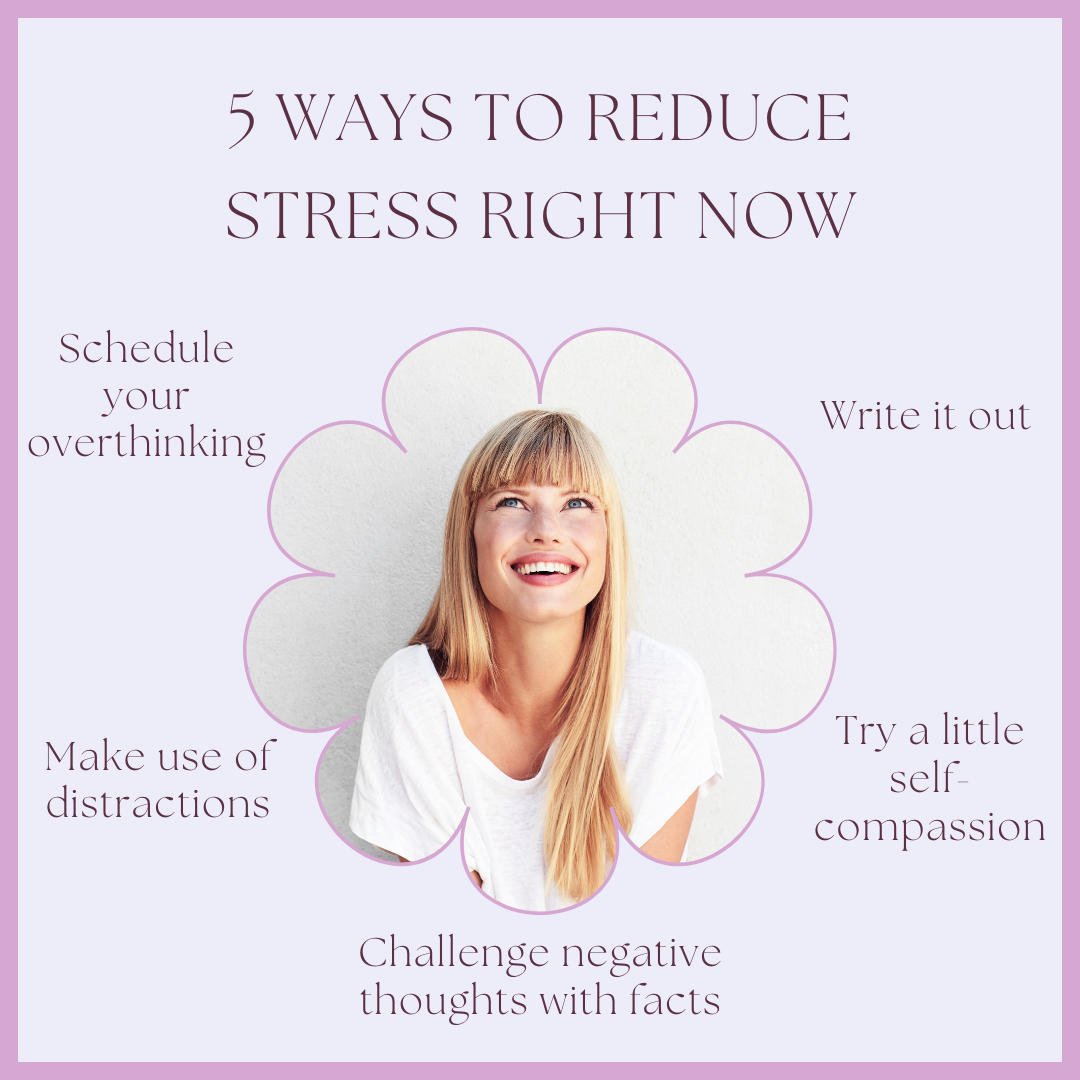
Schedule your overthinking


If you’ve ever tried to stop yourself from overthinking, you know that it often has the opposite effect. Instead of banning overthinking entirely, try postponing it to a specific time and place. Set a timer for 15-20 minutes and let your ruminating mind run wild! When the timer goes off, move on to another activity.

Make use of distractions


We often think of distractions as negative, but distractions can help break the cycle of overthinking. Watch a funny video, listen to an engaging podcast, or talk to a friend or coworker. Go for a walk around the neighborhood or do a Sudoku puzzle. The more mentally demanding the activity, the better!

Challenge negative thoughts with facts


Our brains can trick us into believing all sorts of unfounded things. The next time you find yourself overthinking a situation, ask yourself if there is any factual basis for your thoughts. What are the facts, and what are your feelings and assumptions? By examining the situation objectively, you can counter negative thought patterns with more realistic perspectives.

Write it out


Writing down your thoughts and feelings can help you identify negative thought patterns and gain new perspectives. Again, try setting a timer for 15-20 minutes. Try to record your stream-of-consciousness versus getting caught up in proper grammar, spelling, etc. If you find that you are judging your thoughts and emotions, record those judgmental thoughts, then counter them with self-compassion.

Try a little self-compassion


Have you ever noticed that we tend to be our own worst critics? We “say” things to ourselves that we would never say to someone else. Overthinking often includes some degree of self-criticism as we berate ourselves for mistakes and imperfections. Self-compassion helps us reduce the tendency to self-criticize and overthink (Neff, et. al, 2007). The next time you notice that you are overthinking, consider what you would say to a friend in your situation. Then, direct these compassionate words towards yourself! 

Conclusion

Overthinking can be a hard habit to break, but with practice and patience, you can reduce the time you spend rehashing mistakes or worrying about worst-case scenarios. Used consistently, the above strategies can help you effectively manage your overthinking and improve your mental well-being.

 If you need additional help, consider contacting a mental health professional who can provide additional tools, techniques, and insights.


References:

Michl, L.C., McLaughlin, K.A., Shepherd, K., and Nolen-Hoeksema, S. “Rumination as a mechanism linking stressful life events to symptoms of depression and anxiety: Longitudinal evidence in early adolescents and adults.” Journal of Abnormal Psychology, 122(2), 2013.

Neff, Kristin D., Kirkpatrick, Kristin L., and Rude, Stephanie S. “Self-compassion and adaptive psychological functioning.” Journal of Research in Personality, 41(1), 2007.

image

Mastering Your Emotions: Effective Strategies for Managing Anger

Mental Health, on Aug 26, 2024

Understanding Anger

Anger is a natural and often powerful emotion that everyone experiences from time to time. While it's a normal response to perceived threats or injustices, uncontrolled anger can have detrimental effects on both your physical health and personal relationships. To help you manage your anger and foster a more balanced emotional state, here are several effective strategies, drawn from expert advice and research.

1. Pause and Breathe

When anger strikes, taking a moment to pause and focus on your breathing can be incredibly effective. Deep, slow breaths help activate the parasympathetic nervous system, which promotes relaxation and reduces the immediate physical symptoms of anger, such as increased heart rate and muscle tension. By consciously breathing in through your nose and exhaling slowly through your mouth, you give yourself the space to calm down and think more clearly. This practice not only helps in reducing immediate anger but also prevents you from making impulsive decisions that you might regret later.

Incorporating breathing exercises into your daily routine, such as during moments of stress or before engaging in potentially triggering situations, can enhance your ability to stay calm under pressure. Over time, this can lead to a more mindful and controlled approach to managing your emotions.

2. Identify Triggers

Understanding what specifically triggers your anger is crucial for effective management. Triggers can be people, situations, or even specific behaviors that cause you to feel enraged. For instance, you might become angry when someone interrupts you, when you experience unfair treatment, or when you're faced with unexpected obstacles. By identifying these triggers, you can take proactive steps to address them or avoid them if possible.

Keeping an anger journal can be a useful tool in this process. Write down the instances when you feel angry, noting the context and what specifically set off your anger. Over time, patterns may emerge that reveal underlying issues or recurring triggers. This insight allows you to develop targeted strategies to handle these situations more calmly and effectively.

3. Use Relaxation Techniques

Incorporating relaxation techniques such as mindfulness, meditation, or progressive muscle relaxation into your routine can significantly reduce stress and enhance emotional well-being. Mindfulness involves paying attention to the present moment without judgment, which can help you become more aware of your emotional responses and gain better control over them. Meditation, on the other hand, allows you to center your mind and achieve a state of calm.

Progressive muscle relaxation involves systematically tensing and then relaxing different muscle groups in your body. This technique helps release physical tension associated with anger and promotes a sense of overall relaxation. By regularly practicing these techniques, you can develop a greater sense of calm and resilience, making it easier to manage anger when it arises.

4. Express Yourself Calmly

Effective communication is a cornerstone of managing anger and resolving conflicts. When you express yourself calmly, you reduce the risk of escalating the situation and promote a more productive dialogue. Start by using "I" statements to convey your feelings and needs without placing blame on others. For example, instead of saying "You never listen to me," try "I feel frustrated when I don’t feel heard."

Active listening is also an important aspect of effective communication. Make an effort to truly understand the other person's perspective and respond thoughtfully. This approach not only helps resolve conflicts but also strengthens your relationships by fostering mutual respect and understanding.

5. Take a Timeout

When emotions run high, taking a timeout can be one of the most effective strategies for managing anger. Stepping away from a heated situation allows you to cool down and gain perspective. During this break, engage in a calming activity such as taking a walk, listening to soothing music, or practicing deep breathing.

A timeout doesn't mean avoiding the issue or ignoring the problem. Instead, it provides a temporary distance that enables you to return to the situation with a clearer, more balanced mindset. By addressing the issue calmly and thoughtfully, you increase the likelihood of finding a constructive solution.

6. Engage in Physical Activity

Physical activity is a powerful outlet for releasing built-up tension and stress. Exercise helps to reduce levels of cortisol, the stress hormone, and increases the production of endorphins, which are natural mood lifters. Whether it’s going for a run, participating in a sport, or practicing yoga, engaging in regular physical activity can improve your overall mood and provide a healthy way to manage anger.

Incorporating exercise into your routine doesn’t have to be time-consuming or intense. Even short, daily sessions of moderate activity can make a significant difference in your emotional well-being. Find activities that you enjoy and make them a regular part of your life to help maintain balance and manage stress effectively.

7. Challenge Negative Thoughts

Anger often arises from irrational or exaggerated thoughts that distort your perception of a situation. Cognitive restructuring, or changing the way you think, can help you address these distorted thoughts and reduce the intensity of your anger. Start by identifying any negative or irrational thoughts that contribute to your anger, such as "This is completely unfair" or "Everything is going wrong."

Once you’ve recognized these thoughts, challenge their validity by asking yourself if they are based on facts or assumptions. Reframe your thinking to adopt a more balanced and realistic perspective. For example, instead of thinking "This is always happening to me," try "This is a challenging situation, but I can handle it."

8. Develop Healthy Outlets

Engaging in hobbies, creative activities, or other enjoyable pursuits provides a constructive way to manage stress and express yourself. Activities such as painting, playing a musical instrument, gardening, or crafting can offer a positive distraction and help you release pent-up emotions. These outlets not only improve your mood but also provide a sense of accomplishment and satisfaction.

Finding activities that you are passionate about can enhance your overall well-being and give you a healthy way to cope with stress. Regularly engaging in these activities can help you maintain emotional balance and resilience, making it easier to handle challenging situations.

9. Seek Professional Help

If you find that anger issues persist or feel overwhelming, seeking help from a therapist or counselor can be highly beneficial. Professional support offers valuable tools and strategies for addressing underlying issues that may contribute to your anger. Therapists can provide a safe space to explore your emotions and work through any unresolved issues that may be impacting your ability to manage anger effectively.

Therapy can also help you develop personalized coping strategies and improve your emotional resilience. By working with a mental health professional, you can gain insights into your behavior and learn new skills to handle anger in a healthier manner.

Conclusion

Managing anger effectively involves a combination of self-awareness, practical strategies, and healthy habits. By implementing these techniques, you can better control your emotions, improve your overall well-being, and build stronger, more positive relationships. Remember, mastering your emotions is a continuous journey, and seeking support when needed is a vital part of that process.


image

Breaking Free from the Mental Health Silence

Mental Health, on Aug 03, 2024

Embracing Openness and Authenticity

In recent years, the conversation around mental health has gained significant momentum, yet many still find themselves grappling with the challenge of openly discussing their mental health struggles. The act of "breaking free from the mental health silence" is not just about disclosing personal experiences; it’s about dismantling the barriers that silence and stigma build, allowing for a more authentic and supportive dialogue.

The Weight of Silence

For many, mental health struggles are deeply personal, and the decision to share these experiences can be fraught with fear and uncertainty. The silence surrounding mental health can be oppressive, often fueled by stigma, societal expectations, and personal insecurities. This silence can lead to isolation, making individuals feel like they are navigating their challenges alone, without the understanding and support they need.

The Power of Openness

Breaking free from this silence involves embracing openness and vulnerability. When individuals share their mental health journeys, they not only lighten their own emotional load but also contribute to a broader cultural shift towards acceptance and understanding. This act of courage can inspire others to speak up, fostering a community where mental health is openly discussed and normalized.

  1. Personal Empowerment: Speaking openly about mental health can be incredibly empowering. It allows individuals to reclaim their narrative and assert control over their experiences. This empowerment can lead to increased self-acceptance and confidence, as well as a stronger sense of identity.

  2. Building Connections: When people share their mental health stories, they often discover that they are not alone in their experiences. This shared understanding can lead to deeper connections with others who have faced similar struggles, creating a network of support and empathy.

  3. Challenging Stigma: Silence perpetuates stigma. By breaking this silence, individuals challenge the misconceptions and prejudices that surround mental health. This not only helps to educate others but also contributes to a more informed and compassionate society.

Navigating the Conversation

While the benefits of breaking free from the mental health silence are profound, the process is not without its challenges. Here are some tips for navigating these conversations with confidence and sensitivity:

  1. Assess Your Comfort Level: Before sharing, consider what aspects of your experience you are comfortable discussing. It’s okay to set boundaries and share only what you feel ready to disclose.

  2. Choose the Right Setting: Opt for a supportive and understanding environment when discussing your mental health. This could be with close friends, family members, or in a therapeutic setting where you feel safe.

  3. Seek Support: If you’re unsure where to start, consider seeking guidance from a mental health professional. They can offer strategies for approaching the conversation and provide support throughout the process.

  4. Practice Self-Care: Speaking about mental health can be emotionally taxing. Make sure to engage in self-care practices to manage your emotional well-being and seek support when needed.

Creating a Ripple Effect

Breaking free from the mental health silence can create a ripple effect, inspiring others to share their stories and seek help. This collective shift towards openness helps to dismantle stigma, promote mental wellness, and build a more inclusive and supportive community.

Ultimately, embracing openness about mental health is about fostering an environment where everyone feels valued and understood. By sharing our stories and listening to others, we contribute to a culture of acceptance and compassion, paving the way for greater mental health awareness and support.

In this journey of breaking free from the mental health silence, remember that every voice matters. Your willingness to speak up not only helps to normalize mental health discussions but also paves the way for a more connected and empathetic world.

image

Empowering Communities with Evidence-Based Practices

Mental Health, on July 31, 2024

In today’s evolving landscape of healthcare and public health, evidence-based practices are crucial for creating effective and impactful solutions. The Evidence-Based Practices Resource Center is a pivotal resource for communities, clinicians, and policymakers, offering invaluable tools and guidance to address various health challenges. This blog post delves into how this resource center supports these groups and the significant benefits it provides.

What is the Evidence-Based Practices Resource Center?

The Evidence-Based Practices Resource Center (EBPRC) is an essential hub designed to bridge the gap between research and real-world application. Its primary mission is to facilitate access to evidence-based interventions, strategies, and policies that are proven to be effective in various settings. By providing comprehensive resources and support, the EBPRC aims to enhance the quality of health and social services across communities.

For Communities

1. Access to Proven Interventions: The EBPRC offers communities a wealth of evidence-based interventions that have been tested and validated through rigorous research. These practices cover a range of areas, including substance abuse prevention, mental health support, and chronic disease management. Communities can leverage these interventions to implement programs that are not only scientifically grounded but also tailored to their unique needs.

2. Tools for Implementation: Implementing evidence-based practices can be challenging, especially for communities with limited resources. The EBPRC provides practical tools and guidelines to help communities integrate these practices effectively. This includes step-by-step implementation manuals, training resources, and case studies showcasing successful applications in similar settings.

3. Building Capacity: The EBPRC supports communities in building their capacity to address health issues by providing resources for training and skill development. By enhancing the knowledge and skills of local stakeholders, the center empowers communities to take proactive and informed approaches to health challenges.

For Clinicians

1. Staying Updated with the Latest Research: For clinicians, staying abreast of the latest evidence-based practices is crucial for delivering high-quality care. The EBPRC offers access to a vast repository of research findings, clinical guidelines, and best practices. This ensures that clinicians have the most up-to-date information to inform their treatment decisions and patient interactions.

2. Enhancing Clinical Skills: The resource center provides training and continuing education opportunities that help clinicians refine their skills and adopt new evidence-based techniques. These resources are designed to support professional development and improve clinical outcomes through the application of proven methods.

3. Integrating Evidence into Practice: One of the core functions of the EBPRC is to assist clinicians in integrating evidence-based practices into their daily routines. The center offers practical tools, such as decision support systems and treatment protocols, that facilitate the seamless application of research findings in clinical settings.

For Policy-Makers

1. Informed Decision-Making: Policy-makers rely on evidence to shape policies that impact public health and social services. The EBPRC provides access to a wealth of data and research that can inform policy development and evaluation. This evidence base supports the creation of policies that are grounded in proven effectiveness, ultimately leading to better outcomes for populations.

2. Evaluating Programs and Policies: The EBPRC offers resources for evaluating the effectiveness of existing programs and policies. By providing frameworks and evaluation tools, the center helps policy-makers assess the impact of their initiatives and make data-driven adjustments as needed.

3. Advocacy and Funding: Evidence-based practices are crucial for securing funding and support for health initiatives. The EBPRC supports policy-makers in advocating for evidence-based solutions by providing robust evidence and success stories that can be used to justify funding requests and policy changes.

Conclusion

The Evidence-Based Practices Resource Center plays a pivotal role in advancing public health by providing communities, clinicians, and policy-makers with the resources they need to implement and support effective interventions. By offering access to proven practices, practical tools, and up-to-date research, the EBPRC empowers these stakeholders to make informed decisions and create meaningful change. As we continue to navigate complex health challenges, leveraging the resources of the EBPRC will be key to achieving better outcomes and fostering healthier communities.

For more information and to explore the resources available, visit the Evidence-Based Practices Resource Center’s website and start harnessing the power of evidence-based solutions today.

image

Unraveling the Connection between Gun Violence and Mental Health

Mental Health, on July 30, 2024

In recent years, the spotlight on gun violence has intensified, but amidst the headlines and statistics, one crucial aspect often gets overshadowed: the intricate relationship between gun violence and mental health. It's time to delve deeper into this complex issue, exploring how mental health intersects with gun violence and what we can do to address it.

Understanding the Intersection

Gun violence and mental health are frequently discussed together, but not always with a nuanced understanding. Many public narratives simplify the connection, attributing gun violence primarily to mental illness. However, this reductionist view fails to consider the multifaceted nature of both issues.

Mental health conditions, such as depression or schizophrenia, are often highlighted in discussions about gun violence. Yet, it's essential to recognize that the vast majority of individuals with mental health conditions are not violent and are more likely to be victims rather than perpetrators of violence. Research indicates that only a small fraction of gun violence can be attributed to those with severe mental illnesses.

The Role of Mental Health in Prevention

Addressing mental health issues can play a pivotal role in preventing gun violence, but it requires a comprehensive approach. Mental health support should be part of a broader strategy that includes policy changes, community programs, and improved access to mental health services. Here’s how we can approach this:

  1. Early Intervention and Support: Providing early and effective mental health support can help individuals manage their conditions and reduce the risk of violence. Schools, workplaces, and communities should prioritize mental health resources and promote a culture of support.

  2. De-stigmatization: Breaking down the stigma associated with mental health issues encourages individuals to seek help without fear of judgment. When mental health is normalized, more people are likely to receive the support they need before crises escalate.

  3. Integrated Services: Integrating mental health services with other community resources, such as housing and job support, can address the broader social determinants of mental health and reduce factors that might contribute to violence.

  4. Policy and Legislation: Effective gun control measures that include mental health assessments can help prevent firearms from falling into the wrong hands. However, these policies must be balanced with respect for individuals' rights and privacy.

Community and Societal Factors

Mental health is deeply intertwined with societal factors such as poverty, inequality, and exposure to violence. Communities with high levels of violence and limited access to mental health services often experience higher rates of gun violence. Addressing these root causes requires a multi-pronged approach:

  • Economic Opportunities: Improving economic stability and opportunities can reduce the stressors that contribute to mental health issues and violence.

  • Education and Awareness: Educational programs that address both mental health and gun safety can help reduce stigma and prevent violence. Schools and community organizations can play a key role in these efforts.

  • Community Engagement: Local communities can foster environments where individuals feel supported and valued, reducing the likelihood of violence. Grassroots initiatives and community-led programs can be effective in creating positive change.

Looking Forward

The connection between gun violence and mental health is complex and demands a thoughtful, empathetic approach. While mental health is a significant factor, it is not the sole cause of gun violence. Addressing this issue requires a comprehensive strategy that includes mental health support, policy reform, and community engagement.

As we move forward, it’s crucial to foster open conversations about both mental health and gun violence, promote effective interventions, and work collectively toward a society where both are addressed with compassion and clarity. By doing so, we can hope to reduce gun violence and support those in need of mental health care, creating a safer and more understanding world for everyone.

image

The Connection Between Perimenopause and Perinatal Depression

Mental Health, on July 29, 2024

The experiences of perinatal depression and perimenopause are deeply impactful and distinct life stages for many women, yet they share more connections than might be immediately apparent. Both periods involve significant hormonal fluctuations and profound psychological changes, which can intertwine and influence a woman’s mental health in complex ways. Understanding their relationship is crucial for providing effective support and treatment.

Perinatal Depression: An Overview

Perinatal depression encompasses depression that occurs during pregnancy (prenatal) and within the first year after childbirth (postnatal). It affects about 10-20% of new mothers and can severely impact both the mother and her baby’s well-being. Symptoms often include persistent sadness, anxiety, irritability, and difficulties in bonding with the baby. Hormonal changes, coupled with the stresses of new parenthood and sleep deprivation, contribute to this condition.

Perimenopause: The Transition Phase

Perimenopause is the transitional period leading up to menopause, typically beginning in a woman’s 40s and lasting several years. During this phase, women experience fluctuating levels of estrogen and progesterone, which can lead to a range of symptoms including irregular periods, hot flashes, mood swings, and sleep disturbances. The hormonal changes can also trigger or exacerbate mental health issues, such as anxiety and depression.

Shared Hormonal Influences

Both perinatal depression and perimenopause are influenced by significant hormonal shifts. In perinatal depression, the rapid changes in hormones like estrogen and progesterone during pregnancy and after childbirth can contribute to mood disturbances. Similarly, in perimenopause, fluctuating hormone levels affect neurotransmitters in the brain, impacting mood and emotional stability.

Estrogen, in particular, plays a key role in regulating mood. During pregnancy, high levels of estrogen are thought to help stabilize mood, but the rapid drop after childbirth can trigger depression. In perimenopause, fluctuating estrogen levels can lead to mood swings and increase the risk of developing depressive symptoms. This shared hormonal influence underscores how fluctuations in reproductive hormones can significantly impact mental health at different life stages.

Psychological and Emotional Stressors

Beyond hormonal factors, both periods involve significant psychological and emotional stressors. For new mothers, the challenges of adjusting to motherhood, coupled with physical recovery and potential isolation, can exacerbate feelings of depression. Perimenopausal women, on the other hand, may face stress related to aging, changes in body image, and potential disruptions in family dynamics or career.

Additionally, both stages often involve shifts in identity and life roles. New mothers might struggle with their evolving identity as they transition into parenthood, while women in perimenopause may experience changes related to aging and a sense of life transitions. These stressors can compound the emotional and psychological challenges of each period.

Cumulative Effects and Overlaps

For some women, the effects of perinatal depression and perimenopause may overlap or interact. Women who have experienced perinatal depression might find that their symptoms resurface or worsen during perimenopause due to the ongoing hormonal changes. Conversely, those already experiencing mood disorders related to perimenopause might be more vulnerable to perinatal depression if they become pregnant later in life.

Moreover, the cumulative impact of these life stages can contribute to long-term mental health challenges. Women who experience depression during the perinatal period might have a heightened sensitivity to hormonal changes during perimenopause, and vice versa.

Approaches to Management and Support

Addressing the intersection of perinatal depression and perimenopause requires a multifaceted approach:

  1. Medical Evaluation: Regular evaluations by healthcare providers can help monitor hormonal levels and overall health. In some cases, hormonal therapies or antidepressant medications may be recommended to manage symptoms.

  2. Psychological Support: Therapy and counseling can provide emotional support and coping strategies. Cognitive-behavioral therapy (CBT) and other therapeutic approaches can help manage symptoms of depression and anxiety.

  3. Lifestyle Adjustments: Stress management techniques, regular exercise, and a balanced diet can positively impact mood and overall well-being. Practicing mindfulness and relaxation techniques can also be beneficial.

  4. Support Networks: Building and maintaining strong support networks, including family, friends, and support groups, can provide valuable emotional support and reduce feelings of isolation.