
Why is my wife hitting me?
March 09, 2026 in Relationships,

Domestic Violence in Marriages Stats
1 in 4 men: experience physical violence from an intimate partner at some point in their lifetime, according to the CDC's National Intimate Partner and Sexual Violence Survey.
Only 1 in 5 male victims: ever report the abuse to police — a figure experts attribute to deep-seated shame, fear of disbelief, and cultural stigma around male victimhood.
Roughly 40%: of severe domestic violence victims are male, yet male-focused resources and shelters remain critically underfunded and underrepresented across the country.
Research shows: that female-on-male physical aggression is often rooted in unmanaged mental health disorders, childhood trauma, substance abuse, and unresolved relational conflict — factors that are treatable with the right intervention.
A Therapist's Perspective
In over two decades of practice as a licensed marriage and family therapist, I have sat across from hundreds of couples navigating the most painful terrain a relationship can produce. But among the most quietly devastating cases I encounter are those where a man lowers his voice, looks at the floor, and finally says the words he has rehearsed and swallowed a thousand times before: 'My wife hits me.'
The shame in those moments is almost palpable. Society has handed men a very narrow script for what they are supposed to be — strong, stoic, unaffected. The idea that a woman they love is hurting them physically sits so far outside that script that many men go years, sometimes decades, before they tell a single person. And when they do come forward, they are too often met with disbelief, minimization, or even laughter.
I want to be clear about something I tell every client who sits in that chair: being hit by your spouse is not normal. It is not your fault. And it does not mean you are weak for struggling with it. Intimate partner violence against men is real, it is more common than most people acknowledge, and it is something that both the individual and the couple can often work through — if the right help is found.
The following are composites drawn from cases I have worked with over the years. Names and identifying details have been changed to protect privacy. But the emotional truth of each story is real, and I share them because I believe that seeing yourself in someone else's experience is sometimes the first step toward healing.
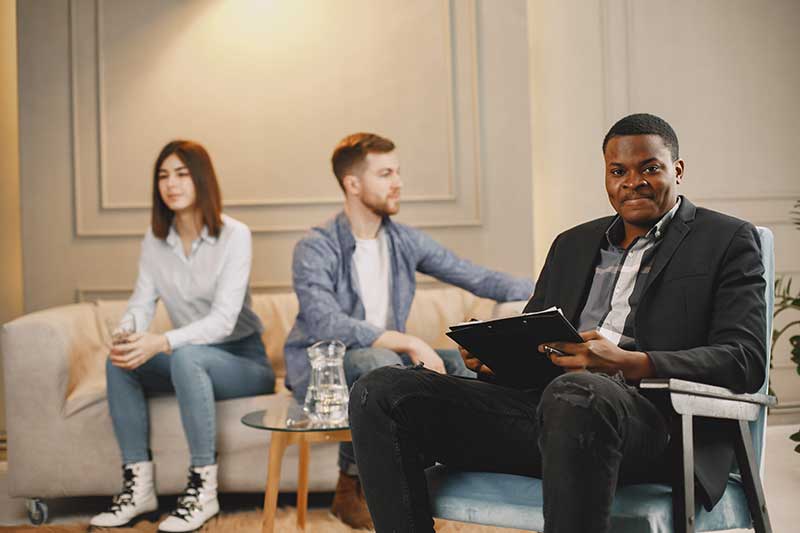
Marcus and Diane: When Childhood Wounds Become Weapons
Marcus came to me alone at first. He was 38, soft-spoken, and worked as a middle school vice principal. He described his wife Diane as brilliant, funny, and deeply loving — on most days. But every few weeks, something would shift. A dinner that ran too late, a comment misread, and then — her hands. He showed me a bruise on his forearm that he had told his coworkers was from a basketball injury.
When Diane finally agreed to come in, I quickly recognized a pattern I have seen many times: she had grown up in a household where violence was the primary language of conflict. Her mother had hit her father. Her father had hit walls. Physical escalation felt normal to her nervous system in a way she had never consciously examined. She was not a monster. She was someone who had been handed a broken toolkit and had never been taught to build a different one.
We began with individual sessions for Diane — trauma-focused cognitive behavioral therapy to work through the internalized beliefs she carried from childhood, combined with dialectical behavior therapy (DBT) skills to help her manage emotional dysregulation in real time. Marcus joined a support group for male survivors of partner violence, which was transformative for him; simply being in a room with other men who understood was, as he later told me, 'like being allowed to breathe again.'
After eight months of combined individual and couples therapy, Marcus and Diane are still together. Diane has not struck him in over a year. It was not a clean journey — there were setbacks, one brief separation, and moments when Marcus questioned whether he could stay. But both of them did the work with extraordinary commitment, and the relationship that emerged on the other side is, by their own account, more honest and more solid than it ever was before. I consider their outcome one of the genuine success stories I carry with me.

Tyler and Renee: Alcohol, Rage, and the Limits of Couples Therapy Alone
Tyler was a 44-year-old contractor who had been married to Renee for eleven years. He came to me at the insistence of his sister, who had noticed the way he flinched when his phone rang. Renee, he explained, only hit him when she drank. The problem was that she drank most nights.
I see many cases where substance use and partner violence are tightly braided together, and I want to be honest with readers about what I tell my clients in those situations: couples therapy cannot do its job when active addiction is in the room. You cannot build new patterns of communication and safety when one partner is regularly chemically impaired. We need the foundation to be stable before we can build on it.
I referred Renee to an outpatient addiction treatment program and continued seeing Tyler individually, helping him work through the hypervigilance, the walking-on-eggshells anxiety that had become his baseline. Renee completed the program, and she and Tyler did eventually come in for couples sessions together. There was genuine progress — Renee understood, sober, what her behavior had done. She was horrified and motivated to change.
But addiction recovery is not linear. Renee relapsed twice. During the second relapse, Tyler called me from his car in a parking lot, and the exhaustion in his voice told me something I suspected for months: he was done. Tyler and Renee separated six months later. He was grief-stricken and also, quietly, relieved. He told me in our final session that he did not regret trying. But he also said that no one had ever taught him he was allowed to leave. That, I think, is perhaps the most important thing he learned in our work together.
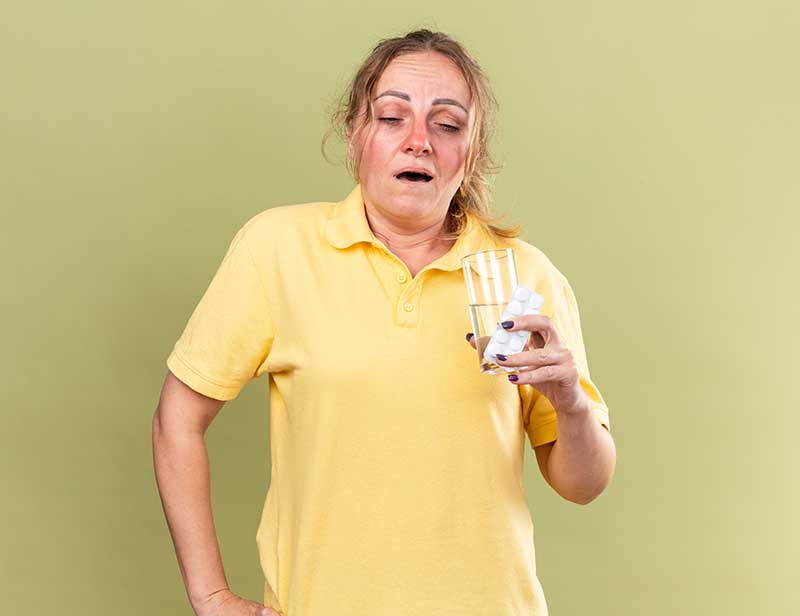
James and Priya: Postpartum Rage and the Diagnosis That Changed Everything
James was a 33-year-old nurse who came to me about five months after the birth of his and Priya's first child. He was careful, methodical in how he described things — occupational habit, I suspected. He said Priya had become 'physically expressive in ways she never was before.' I gently helped him name it: she had been hitting him, throwing objects, and on one occasion had scratched his neck badly enough to leave marks.
What made James's case distinct was his instinct, even as the person being hurt, to protect and explain his wife. He understood from a clinical standpoint that postpartum depression could be severe. What he did not know — and what I suspect many people do not know — is that postpartum rage is a recognized variant of postpartum depression that is dramatically underdiagnosed. It presents not as sadness but as explosive, disproportionate anger, often directed at the nearest person.
I coordinated with Priya's OB and she was evaluated by a perinatal psychiatrist. The diagnosis was clear. She was started on medication and began individual therapy focused on the postpartum experience. Once Priya had a name for what was happening to her, something shifted. She had believed she was simply a bad person. Understanding that her brain chemistry had been profoundly disrupted by childbirth gave her the ability to engage with treatment rather than collapsing under guilt.
James and Priya came in for couples work after Priya had been stable for about two months. The sessions were, honestly, some of the most moving I have had in my practice. James was asked to articulate the fear and confusion he had been living in. Priya was asked to hear it fully. The incident that stays with me is when Priya said, 'I didn't know you were scared of me.' And James said, very quietly, 'I didn't know I was allowed to be.' They are doing well. Their daughter is almost two now.
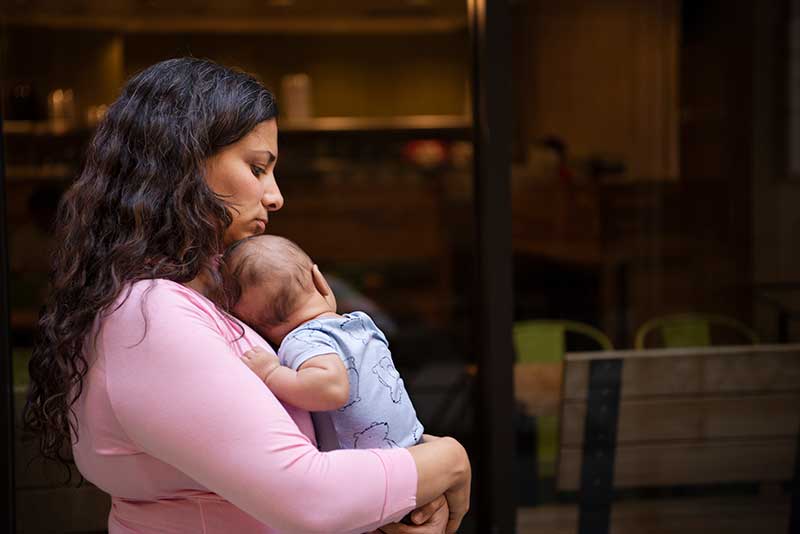
Camille and Zoe: The Myth That Women Don't Hurt Women
Not all the wives who hit their partners are hitting men. Camille was 41, a high school art teacher, and had been married to Zoe for four years when she first came to see me. She was visibly uncomfortable, and I understood why almost immediately: there is a particular layer of erasure that same-sex couples who experience domestic violence face. The cultural narrative tells them — tells everyone — that this kind of violence only flows one direction. Coming forward means not only admitting to abuse, but fighting to be taken seriously on top of it.
Zoe, Camille's wife, had a diagnosis of borderline personality disorder that was poorly managed. Her behavior during emotional dysregulation episodes had escalated over the previous year from verbal cruelty to physical aggression — shoving, slapping, and once cornering Camille in a way that left her trembling long after Zoe had calmed. Camille blamed herself. She had told herself that Zoe couldn't help it, that her own patience was the problem, that she simply needed to be more understanding.
I want to name something clearly here: a mental health diagnosis is an explanation, never an excuse. Zoe deserved treatment. She also needed to be held accountable. These two things are not in conflict. I worked with Camille on re-establishing her understanding of her own safety as non-negotiable — something that trauma and love had eroded in her. Zoe, to her credit, began DBT with a specialist, a treatment that has strong evidence for borderline personality disorder.
Camille and Zoe's story does not have a tidy ending. After a year of work — individual therapy for both, couples sessions when both therapists agreed it was appropriate — they decided to separate. It was not a dramatic ending. It was a quiet, mutual acknowledgment that the relationship itself had become the container for patterns that were harming them both. Camille told me in our last session that she finally understood the difference between loving someone and being safe with them. That distinction, I told her, is one that takes some people a lifetime to learn. She had learned it. That matters.

You Are Not Alone — And You Are Not Without Options
If you are a man — or anyone — sitting with the question that forms the title of this article, I want you to hear something directly: you are not imagining it. You are not overreacting. What is happening to you has a name, and it is not acceptable regardless of who is doing it or why.
I have told you four stories in this article. Three of them involved some form of forward movement — healing, stabilization, hard-won growth. One ended in separation. I share all four because that is the honest range of what recovery looks like. Therapy is not a guarantee of any particular outcome. What it is a guarantee of, when you find a good therapist and commit to the process, is that you will understand yourself and your situation more clearly on the other side than you did going in. And clarity, even when it's painful, is always better than the fog of shame and confusion that abuse thrives in.
If your wife is hitting you, the first step is not couples therapy. The first step is your own safety. Tell someone you trust. Contact the National Domestic Violence Hotline — yes, they support male victims. If the violence is escalating, take it seriously before it becomes something neither of you can take back.
And if she is willing to get help — and you still love her, and you still want to try — then try. With support. With boundaries. With the understanding that love is not the same thing as endurance, and commitment does not require you to absorb someone else's violence as the price of staying.
After all these years in this chair, the thing I believe most deeply is this: people can change. Relationships can heal. But only when everyone in them is finally honest about what is actually happening. You asking the question is the beginning of that honesty. Be proud of yourself for asking it.
If you or someone you know is experiencing domestic violence, contact the National Domestic Violence Hotline at 1-800-799-7233 (TTY: 1-800-787-3224).