
How long does cannabis-induced psychosis last?
April 20, 2026 in Substance Abuse,
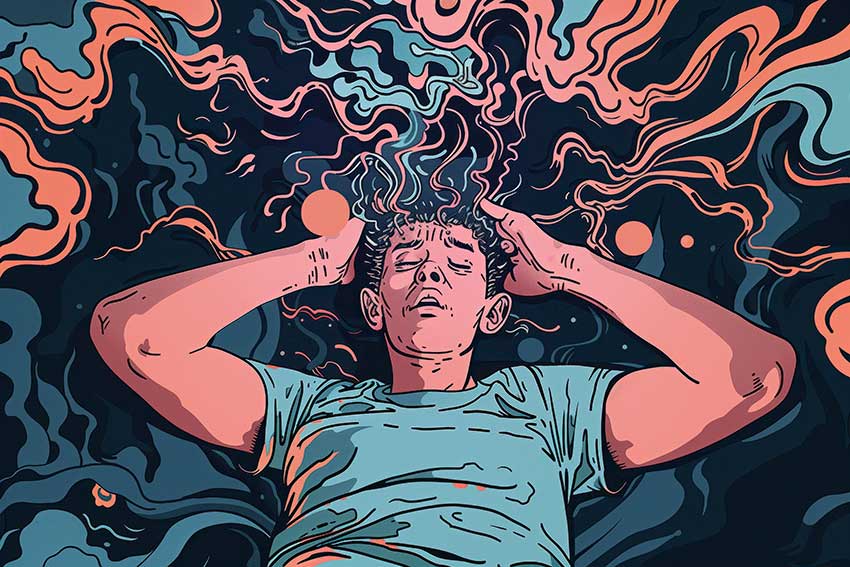
Cannabis-induced Psychosis Quick Stats
- Around 1 in 100 cannabis users may experience psychosis at some point.
- Cannabis-induced psychosis episodes typically last a few days to a few weeks, though some cases extend longer.
- High-potency THC products increase the risk of prolonged psychotic episodes
- Early intervention significantly improves recovery time and outcomes
An Addiction Counselor’s Perspective
I’ve been a substance abuse counselor for over eight years, working primarily with individuals struggling with drug and alcohol issues. Over the years, I’ve seen a wide spectrum of cases, from alcohol dependency to opioid addiction, and increasingly, cannabis-related mental health concerns. My focus has always been on compassionate, personalized care. I believe understanding each person’s story, their unique life circumstances, and their individual physiology is just as important as any clinical treatment plan.
Cannabis is often perceived as harmless, but for some individuals—especially those with underlying vulnerabilities—it can trigger intense psychological episodes. One of the most challenging is cannabis-induced psychosis, a condition that can leave patients—and their families—confused and scared. Today, I want to share real experiences from my practice and shed light on how long these episodes can last, what factors influence duration, and how treatment can help.

Real-Life Experiences
Marcus: The Young College Student
Marcus was a 21-year-old African American college student who came to me after experiencing his first psychotic episode following heavy cannabis use during finals week. He reported seeing shadows moving in his dorm room and hearing whispers that weren’t there.
In Marcus’s case, the psychosis lasted about five days. The intensity was high during the first two days, tapering off as he was guided through grounding techniques and supportive counseling. His age, first-time exposure to high-potency cannabis, and stress from exams all contributed to the onset. The episode ended relatively quickly, but the anxiety lingered for a few weeks, which we addressed through therapy sessions and mindfulness practices.

Elena: The Mid-30s Professional
Elena, a 34-year-old Hispanic woman, had a long history of occasional recreational cannabis use. She started experiencing paranoia and auditory hallucinations after switching to a highly concentrated cannabis extract for sleep issues. Unlike Marcus, her episode lasted nearly three weeks.
Elena’s psychosis was compounded by sleep deprivation and pre-existing anxiety. Her case required a combination of outpatient therapy, brief medical monitoring, and adjustments in her daily routine. Recovery was gradual, but she returned to her regular life fully functional after proper guidance. Studies suggest that episodes in individuals with prior cannabis exposure can be prolonged by underlying anxiety or stressors (Morrison et al., 2018).

Jamal: The Early 40s Veteran
Jamal, a 42-year-old African American military veteran, had a more complicated background. He used cannabis to cope with chronic pain and PTSD. After a particularly strong batch, he experienced visual hallucinations and intense disorientation.
Jamal’s psychosis lasted two weeks, and the recovery was uneven. Because of his PTSD, he initially resisted treatment and doubted that cannabis could trigger psychosis. Through consistent counseling and a structured plan involving cognitive-behavioral therapy and support groups, he slowly regained clarity. His case highlights how pre-existing mental health conditions can extend the duration of cannabis-induced psychosis (Schoeler et al., 2016).

Sophie: The Teenager
Sophie was a 17-year-old Caucasian high school student who tried cannabis at a friend’s party. She developed extreme anxiety and delusional thoughts almost immediately. Her parents brought her in after three days of continuous fear and disorientation.
For Sophie, the psychotic symptoms resolved within four days, but she remained anxious about returning to school. Early intervention, family support, and psychoeducation were crucial in helping her understand that the episode was temporary and triggered by cannabis, not an indication of permanent mental illness. Adolescent brains are especially sensitive to THC, which may explain the rapid onset but relatively brief duration in her case (Volkow et al., 2014).
Ravi: The Older Adult
Ravi, a 56-year-old South Asian man, had never used cannabis before. Following curiosity-driven experimentation with a high-THC concentrate, he experienced severe paranoia and auditory hallucinations. Unlike the others, Ravi’s psychosis lingered for over a month.
Ravi’s slower recovery was influenced by age-related metabolism changes, cardiovascular concerns, and delayed medical attention. He required close medical monitoring, counseling, and support from his family. His case emphasizes that older adults may experience longer-lasting psychotic episodes and need tailored treatment plans (Batalla et al., 2013).

Understanding the Duration
The duration of cannabis-induced psychosis is highly variable. Most episodes last a few days to a few weeks, but as seen in my practice, factors like age, pre-existing mental health conditions, potency of cannabis, stress levels, and whether the person receives early treatment all play a role. Importantly, while the acute psychotic symptoms may resolve, residual anxiety, paranoia, and sleep disturbances can persist if not addressed (Morrison et al., 2018).
Cannabis-induced Psychosis Treatment Options
From my experience, treatment is most effective when it is multimodal—addressing both the psychological and physical aspects of the episode. Here are some of the key approaches:
- Immediate medical evaluation – Ensures that symptoms are not caused by another medical condition and determines whether hospitalization is necessary.
- Therapeutic counseling – Cognitive-behavioral therapy, grounding techniques, and psychoeducation help individuals understand and manage their experiences.
- Medication management – In some cases, short-term antipsychotic medications may be prescribed to reduce severe symptoms (Schoeler et al., 2016).
- Support systems – Family involvement, peer support groups, and community resources help stabilize recovery and prevent relapse.
- Lifestyle adjustments – Adequate sleep, nutrition, exercise, and avoidance of cannabis are critical to reducing the risk of recurrence.
Early intervention consistently leads to shorter recovery times and better outcomes. Delays in seeking help can prolong the episode and increase stress on both the individual and their support network.
Words of Wisdom from the Counselor
After seeing hundreds of cases over the years, one truth has become clear: psychosis, whether cannabis-induced or otherwise, is never a moral failing—it’s a signal that something in the brain-body system is overwhelmed.
If you or someone you know experiences unusual thoughts, paranoia, or hallucinations after using cannabis, the best approach is immediate care, patience, and support. Recovery is almost always possible with timely intervention, proper guidance, and a nurturing environment.
Never underestimate the power of listening, understanding, and nonjudgmental support. Substance use can be complicated, but with the right help, anyone can navigate back to mental clarity and stability.

References
- Batalla, A., Bhattacharyya, S., Yücel, M., Fusar-Poli, P., Crippa, J. A., Nogué, S., … & Martín-Santos, R. (2013). Structural and functional imaging studies in chronic cannabis users: a systematic review of adolescent and adult findings. PLoS ONE, 8(2), e55821.
- Di Forti, M., Marconi, A., Carra, E., Fraietta, S., Trotta, A., Bonomo, M., … & Murray, R. M. (2015). Proportion of patients in south London with first-episode psychosis attributable to use of high potency cannabis: a case-control study. The Lancet Psychiatry, 2(3), 233–238.
- Di Forti, M., Quattrone, D., Freeman, T. P., Tripoli, G., Gayer-Anderson, C., Quigley, H., … & Murray, R. M. (2019). The contribution of cannabis use to variation in the incidence of psychotic disorder across Europe (EU-GEI): a multicentre case-control study. The Lancet Psychiatry, 6(5), 427–436.
- Morrison, P. D., Nottage, J., Stone, J. M., Bhattacharyya, S., Tunstall, N., Brenneisen, R., … & Murray, R. M. (2018). Effects of synthetic intravenous Δ9-tetrahydrocannabinol on psychosis, mood, and cognitive functioning in healthy people: a randomized controlled trial. JAMA Psychiatry, 75(3), 1–10.
- Schoeler, T., Monk, A., Sami, M., Klamerus, E., Foglia, E., Brown, R., … & Bhattacharyya, S. (2016). Continued versus discontinued cannabis use in patients with psychosis: a systematic review and meta-analysis. The Lancet Psychiatry, 3(3), 215–225.
- Volkow, N. D., Baler, R. D.,